WhatsApp started as a free encrypted messaging service sometime in the last decade and quickly replaced all forms of instant communication then existing. SMS was replaced; and almost dead. Free SMS packages which lured college and young guys were no longer a draw as people downloaded WhatsApp and started using that app as a secure, fast, and viable means of communication within their network. So who doesn't know about this? People were enamoured by the app - at least the more "aware" people - that it was attractive because the app was secure (encrypted), it was free, it was phone based, it was SIM agnostic, it was fast and secure, and it was ad-free. To top it all we could share our media files, documents, contacts, and make and receive audio and video calls. But most important of all, for a few discerning users at least, the founders had promised that since they were not interested in monetising the app, they would ensure that it would always be free and not bound by the lure of money.
Then Facebook (FB) entered the picture and bought WhatsApp for an insane amount of money with a promise that the founders would continue to lead the further development of the app, and that FB would not interfere in the privacy of WhatsApp. Then in 2017, when it became clear to the founders that FB may not honour its commitment and would like to monetise its investment in the phenomenally growing messaging app, they left. One of them left in 2017 and the other quit in 2018.
We didn't care. We were happy with what we were getting. Slowly I saw WhatsApp for business being launched and I started getting some strange marketing messages. WhatsApp started WhatsApp payments, which I didn't join in since I drew a line in linking a messaging app with payments. (I do not have PayTm, GPay, Amazon Pay, or any other payment application). Even that was OK. No issues. Most of us felt that these are just some add-ons that WhatsApp wants to include to make more money.
Well, what caught the ire of many users was the recent announcement of changes in WhatsApp's privacy policy, that, in effect, mentioned that WhatsApp would be sharing some more private data of users with Facebook. We do not have an opt-out there. If we do not agree to those changes, WhatsApp would not be available for us. This would be with effect from 8th February, 2021. So in about a month's time, we need to be prepared for our private information being shared with FB and that data being made available for advertisers. Hah! This was too much.
There have been a flurry of message exchanges of late, ironically on WhatsApp, denouncing this move and encouraging and motivating our network to make a switch from WhatsApp to other messaging apps like Signal or Telegram. Within a couple of days, our family group made the switch to Telegram and there has been a move to switch to Telegram or Signal in my school and college groups too! We plan to make the switch within a few days. Over time, there are rumblings that we should delete our account in WhatsApp and uninstall the app from our devices. Today's news in India Today suggests that Signal has become the most downloaded app on Play Store. Surely this information is being viewed with some consternation at Facebook and WhatsApp. Will they revoke their policy change now? We need to wait and see.
A major reason for people to be apprehensive is because of the assurance given by Facebook that this policy change will not be implemented in Europe/UK. BBC reported this, so I am sure this news is authentic. Does Facebook consider people in India to be commodities? Many of us felt hurt by this discrimination and were compelled to move to other messaging apps.
Edit (6-Jan-2021): The photos were not uploaded properly and though the blog was showing quite ok on my computer and mobile phone, I got some feedback from my friends that they couldn't see the photos. I am sorry for the goof up.
I have been enamoured of sunsets for a long time now - actually ever since I had a cellphone with a camera! The device is handy, it is available with me always, and whenever I see sunset, I am tempted to capture that image for posterity. Now one may be tempted to ask, why not sunrise? Actually the places I have lived haven't been too friendly for sunrise watching - what with buildings and trees all around my home, and me being lazy I do not venture outside too much before dawn. But there have been instances when I have seen sunrise during my travels. Photos of that are for some other time.
The best sunset views are over the sea or over a desert and the one above was captured in Jaisalmer when we travelled there on vacation in August 2019. The above image was taken with an SLR camera.
The golden hue of the sun and the sky turning orange and other hues over time before darkness sets in, is a fascinating sight and while looking around, one can only marvel at the creation and nature and what bounties are there around us for us to enjoy and take in.
Now here is a collage of a few photos that I have taken on my camera/cellphone over the years.
NOTE TO READER: There are YouTube videos embedded in this blog. By clicking on the play icon, you would be able to play the song within the blog itself. However, some of the videos do not open within the blog because of copyright (?) issues, but you, reader, will be able to open the video through the YouTube link that appears. I am sorry for this issue, but it has nothing to do with me, I assure you. I am unable to bypass this without avoiding the songs themselves, which I am loath to do because I like them so much. So bear with me please! If you are opening this on your mobile and cannot see the embedded videos, please first scroll down and tap on "view the web version". Then the embedded videos can be seen.
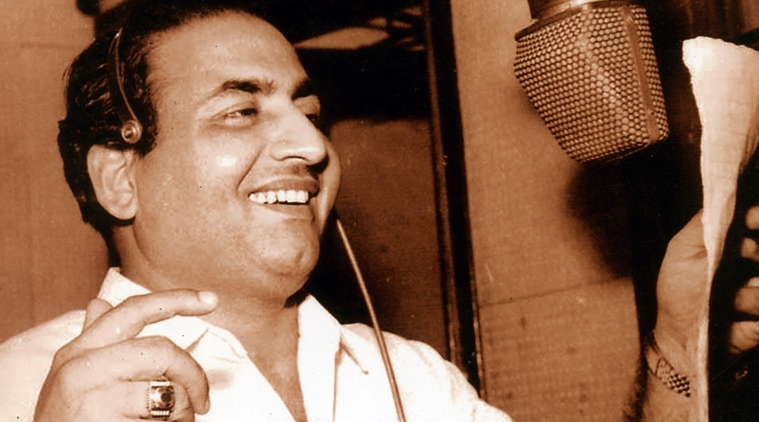
As we come closer to the legendary singer's 96th birthday, I thought I should post some of the songs that I absolutely love and like to listen to multiple times. I will be only posting the YouTube links of those songs with a brief description of why I like that song.
1. "Madhuban mein Radhika naachey re". The combination of music, lyrics and vocals make this song among the best. Dilip Kumar's expressions during the song add to the beauty and picturisation of the song. Right from my childhood, I used to love listening to this song when it was played on radio. This song is set to Hameer raag and the gati of the song is drut, which means it is sung in a fast tempo.
2. The next song in the list has to be another Dilip Kumar number from Ganga Jamuna. Nain lad jaihen to... The song is in Awadhi dialect and the whole film had characters speaking in that dialect. This was probably the first attempt by a film maker to produce a film in a dialect of Hindi rather than the Hindustani language that almost all films are made in. Rafi aced the song in that dialect. I almost forgot to mention that here!
3. Rafi saab created a stir with Baiju Bawra. The songs composed by Naushad with lyrics by Shakeel Badayuni topped the popularity charts the year the film was released. Among the many songs that Rafi sang for Bharat Bhushan, the most famous song is "Bhagwaan, bhagwaan, O duniya ke rakhwaale". The song starts with a slow pace and pitch and goes to high pitch, which in my opinion no one else could have achieved. The story that Rafi had blood coming out of his mouth towards the end of the song, has been rubbished by Naushad in an interview.
4. A change of scene here. After a serious song, let us come to appreciate the range of Rafi's singing for Johnny Walker in Pyaasa. Sar jo tera chakraaye. This song was No. 2 in the annual list of songs in Binaca Geetmala, the unofficial ranking of songs of the year. Pyaasa had some really soulful songs including the iconic song, Ye duniya agar mil bhi jaaye to kya hai. Wonder why that song didn't hit the popularity charts that year, but this song did! Anyway, coming back to this song sung so wonderfully by Johnny Walker on screen, I always wonder how Rafi could modulate his voice for various actors, including Johnny Walker and Mehmood.
5. Next is a duet with Asha Bhosle for Kala Pani. The movie was released in 1958 and had that fantastic song with so much "nakhras" by both Rafi and Asha that the actors on screen - Dev Anand and Madhubala - had to only imitate the voice with their expressions. One of my favourite songs of the duo. Accha ji mein haari chalo maan jaao naa.
6. Still sticking with Dev Anand, the next song is from the film Kala Bazaar. Apni to har aah ik toofan hai. Dev Anand sings the song in the first class compartment while travelling from Bombay to Ooty (no direct train existed then, none does so now too; but for a movie, I suppose anything's possible). Dev Anand knows that Waheeda Rehman is in love with Vijay Anand, but he still serenades her and this song has a double meaning. Though on the face of it, it appears that Dev Anand is praying to the God above, he is actually requesting Waheeda Rehman in the upper berth to show some "mercy" towards him! Well picturised by the director Vijay Anand - the king of song picturisation. As for Rafi, his singing in a soft voice was just the voice that Dev needed.
7. I will go to Pradeep Kumar next who had Rafi sing most of his songs. Among the songs that proved to be a big hit, this one is up there. Ab kya misaal doon mein teri... from the film Aarti. The composer is Roshan and lyrics are by Majrooh Sultanpuri.
8. The next song is from the film, Baharen Phir Bhi Aayengi. The film was produced by Guru Dutt films with Guru Dutt in the lead and this song would have been different if it was picturised on Guru Dutt. But unfortunately, Guru Dutt died without completing the film. After a while and with some difficulty in looking for another actor to play that role, Dharmendra was chosen. He performed very well in the film; though one question would always remain as to how would Guru Dutt have been! Lyrics by Anjaan and music by O. P. Nayyar. The song is Aap ke haseen rukh par aaj naya noor hai. Ignore Dharmendra's poor attempt at convincing us that he is playing the piano! Focus instead on the beauty of Mala Sinha and Tanuja. Both look ravishing in the movie.
9. I cannot exclude this song from Mere Mehboob. Mere mehboob mujhe meri mohabbat ki kasam. The ghazal with inimitable poetry by Shakeel Badayuni and music composition by Naushad saw Rafi sing with such pathos that it is impossible to imagine anyone else singing this song - even today with all technical assistance available for the singers.
10. The song Din dhal jaaye, haaye from Guide is my next choice simply because it is a sad song and the first sad song in this list. I recall a comment by S. P. Balasubrahmanyam, himself a popular and excellent singer, compliment Rafi's sigh when he says "haaye", and explains for us laymen how difficult it could be for a singer to bring out that expression in the song which would reflect the position that Dev Anand found himself in that situation.
11. This romantic duet from Kashmir ki Kali with Asha Bhosle, Deewana hua baadal has always impressed me with the ease with which both singers bring the romance through their vocals and modulation! S. P. Balasubrahmanyam sings this on stage quite effortlessly and also comments about the range of Rafi while saying that he would listen to this song during his college days without understanding the meaning, but with tears in his eyes.
12. Who can forget Dosti and the songs in that sleeper hit film (third highest grosser of 1964). Though 'Chahoonga mein tujhe' was more popular during the year it was released, I much prefer 'Jaanewaalo zara mud ke dekho mujhe'. The voice that attracted the crowd and made the two boys earn some money! One of the earliest films of Laxmikant Pyarelal duo, who finished with the maximum songs sung by Rafi saab.
13. A Qawwali to bring some variation in the songs of Rafi. This song Parda Hai Parda from the film Amar Akbar Anthonybrings out the fantastic ability of Rafi to sing qawalis with equal elan. There are a few other qawwalis which Rafi has sung in the company of Asha Bhosle or Manna Dey, but I am choosing a solo by Rafi.
14. Next is a soft song by Rafi from Oonche Log (a remake of the Tamil original Major Chandrakant). An interesting story line. But the song is a romantic song by Rafi for Feroz Khan. Jaag dil-e deewana, rut jaagi...Music by Chitragupt and lyrics by Majrooh Sultanpuri. Rafi's soft voice to welcome the dawn is so soothing!
15. A patriotic song now. Hum laaye hain toofan se kashti nikaal ke from Jagriti. Lyrics by Kavi Pradeep and music by Hemant Kumar. This song used to be played on record players in our childhood during Republic Day and Independence Day celebrations in the township where I grew up.
16. A fun song to end this blog. Bade miyan deewaane, aise na bano. Joy Mukherjee in Shagird trying his best to make a gentleman and lover-boy of I.S. Johar. Some passages of the song bring out the fun very effectively. Lyrics byMajrooh Sultanpuri and music by Laxmikant Pyarelal.This is a duet by Rafi and Manna Dey! There was a toss up between this song or the other Duniya paagal hai, ya phir mein deewana. But my vote is for Bade miyan deewaane for its fun factor; and not for the slapstick!
17. The best song that I like is a bit rare song, hardly played on TV or on radio nowadays, but I used to hear the quite frequently in my younger days on Vividh Bharati. Kahin ek maasoom naazuk si ladki from the film Shankar Hussain. Lyrics by Kamaal Amrohi and music by Khayyam. This soulful rendition of the nazm is among the favourites of Rafi saab also.
Hope you enjoyed this collection. In case of any comments, please do write in.
Have you ever told anyone, "I miss you" when you didn't see them for sometime, or didn't hear from them in a while? Have you informed them of your desire to remain in touch with them, either meeting in person, or speaking with them, or receiving a message, an email, or just a "Hi!"? I am not much of a sociable person. I do not go out of my way to establish contact, maintain the contact, or remain in touch with many acquaintances; but friends is a different story.
I miss my elder sister, Dr. Shanti, whom we all lost in 1985. It has been 35 years since she left us, but hardly a day passes when I do not remember her fondly and miss her. But did I tell her that I missed hearing from her when she was alive and well? I wrote letters to her and she to me; and I have preserved some of them. Their value to me increased manyfold once she left us. I keep in touch with my other sisters and nephews and nieces often and when we haven't exchanged any messages or haven't spoken in a while, we do get in touch over phone and talk. But I hardly say, "I missed you!" though in my heart I feel that I missed them.
My elder son, Anirudh, lives in Bangalore and says quite often over phone when we speak, "I miss you both (my wife and I)." I hadn't thought much of that statement of his till today, but now I understand the import of why he says those words and what I should say in response. i have never heard my father say those words, nor I remember saying them to my parents when they were alive and I was living elsewhere. Those three words would have made a world of difference to them, I think. I miss you appa and amma!
I miss you may be a romantic way of a couple who have been apart and I am no romantic, nor have I ever romanced anyone to have said this to any person of the opposite sex. My reference in this blog is with respect to missing a friend, a relative, an associate, or a colleague. What happens when we say, "I missed you"? What would be their reaction to a comment like that? Said in all sincerity and honesty, I am sure the other person would feel elated and happy. What if we don't say that, but nod our head, say, "Hello! Hope you are doing well," and pass on? What would the other person feel? Do both the greetings mean the same thing? In my honest opinion, saying, "I missed you" would mean more to the other person than a mere greeting.
While I was studying for my masters programme, there was a subject "Organisation and Methods", which referred to the study of office procedures with an aim to simplify the work. There was one topic, Forms design. This referred to the study and analysis of "office forms" and examining the design and layout. Additionally we would need to also see the number of copies of the forms circulated to various people and what they did with their copy! More often than not, multiple copies with colour codes could be simply reduced by eliminating one or more copies and examining if the "recipient" missed his or her copy. If there was no word, it would be obvious that they didn't need the copy! If they did, they would come back and ask for it and their copy could be restored. One way of saying to the copy of the report, "I missed you!"
In my quest to complete writing a blog a day for 100 days, I intentionally missed writing a blog yesterday (blog #24). I expected a few of my regular readers to get back to me with a message asking if I had forgotten to post that in my WhatsApp status and in Facebook? Except my younger sister, Raji, no one else missed my blog! That is what prompted me to write on this topic!
This blog will be about teams in business - more specifically manufacturing or service industry. We have been hearing this term during the last quarter of the last century. Maybe earlier, the industry believed more in individuals carrying out tasks and responsibilities assigned to them. So we had people saying, "No, this is not my job." We may still see such comments from staff in government and bureaucracies where individuals have to complete their assigned tasks.
Back in the 1980's trade union leaders were powerful and there were many instances where they could hold an organisation to ransom by demanding wage rises. I am not against unions in organisations, since before unions were formed, the employers took undue advantage of workmen and exploited them. We had instances of coal-mine workers who worked in unsafe conditions and died because the employer was more interested in mining away all the coal without leaving anything for holding the tunnels.
Be that as it may, the discussion about Teams cannot be complete without mentioning the influence of Japanese management concepts in business. Toyota Production System, Total Productive Maintenance, and TQM came to be adopted by industry from the 90's and they brought with it the concept of team work. Many engineers in the industry who would work on their own now had to work in a team and contribute so that the team output would be much more than the sum total of what each individual could do. It also brought in the need for implementing improvements in processes and complementary skills were brought to the team meetings thereby ensuring that the implementation of improvements were successful. In any team sport we see a team comprises of people with unique and often complementary skills and they all come together during the game to ensure victory for the team. Business organisations have emulated the concept from sport and have been quite successful.
Is it good to aspire for excellence in one's activities and seek perfection in whatever one is doing? Does Excellence equate Perfection? If not, what are the differences? Let us try and examine them. In this blog, I will be attempting to reference some published material to understand these terms.
We will not be referring perfection with respect to sciences since there are perfect numbers, perfect models, etc in sciences. I am confining my blog to perfection in carrying out tasks or being part of process in any organisation.
Perfection is a state, variously, of completeness, flawlessness, or supreme excellence (Wikipedia - Perfection). So perfection can be understood as something that is impossible or extremely difficult to improve upon. As an Industrial Engineer, I am always led to believe the axiom, "there is always room for improvement".
Since the definition of Perfection contains the term, Excellence, let us also look at how Excellence is defined. Excellence is a talent or quality which is unusually good and so surpasses ordinary standards. It is also used as a standard of performance. (Wikipedia - Excellence). Now this definition is more to my liking, since it does indicate that there is no room for improvement.
There are Business Excellence award systems in vogue in various countries and I have been part of a team that was tasked to design and implement Business Excellence award system in Oman when I worked in the Ministry of Commerce and Industry there. Among the many criteria there, one important aspect that we looked at were the processes for identifying areas of improvement and implementing those improvements with quantitative measures in place to show the extent of improvements completed.
Aamir Khan is often referred to as a perfectionist and that moniker is given by the media to him for the way he approaches any role he undertakes - movies as well as TV programmes. Is he a perfectionist who, as per the definition we saw above, "flawless"? Arguably not. The blog is not about the actor, so let us stop with actor references here.
Is the goal of perfection good? Is it a healthy aspiration? What about the people around such persons? Do they have a pleasant life living in the presence of a perfectionist? Many psychologists advice us against the pursuit of perfection cautioning us that such behaviour leads among other aspects (Signs of perfectionist) to:
a. Expectation of perfection from others;
b. Struggling to complete tasks in which one doesn't feel one can do well;
c. Any mistake as a proof of inadequacy;
d. Any self worth depends on the achievement.
Do you still want to be a perfectionist? Or would you rather pursue excellence?
Right from my younger days - school days to be more precise - I have been fascinated by the ability of writers to convey so much in a few pages. The protagonist, other supporting characters, if any, and the denouement, if the writer wants a closed end. There are stories however, which leave the reader pondering of the end, since the reader didn't find any resolution to any conflict. Such stories have a more lasting impression in me, at least, since I keep replaying the story in my mind; picturing the various scenarios presented by the writer, and trying to complete the story myself. Probably that is what the writer intends in the first place. Total involvement by the reader; bringing him/her closer to the scene of action and making him/her a part of the whole narrative.
Some authors have argued that a short story must have a strict form. Somerset Maugham
thought that the short story "must have a definite design, which
includes a point of departure, a climax and a point of test; in other
words, it must have a plot". This view is however opposed by Anton Chekov
who thought that a story should have neither a beginning nor an end. It
should just be a "slice of life", presented suggestively. (From: Wikipedia)
Among English short story writers, my favourite has been O. Henry. His life was interesting, to say the least and some of his stories were ones where there wouldn't be any conclusion with the reader left to ponder regarding what would happen next. Among Tamil short story writers, Sujatha (Rangarajan) was a master with his simple writing style and various genres that he explored. Jeffrey Archer is another master story teller and his short stories have been quite popular. Our Mahabharata contains so many short stories told by various characters during the exile of the Pandavas that they form the moral fibre of our culture and tradition. How can one forget R. K. Narayan and his Malgudi Days collection of short stories? The stories featured a small boy, Swami, and his interactions with various people who came into his life in the small fictional town, Malgudi.
Advertisements are another form of story telling. Now this is done in a few seconds and those ads that convey a story of sorts, capture our attention more and we look forward to the ads reappearing again for us to understand the 'story' embedded in the advertisement.
Sometimes when we read long novels or watch full length feature films, we tend to think that this would have made an excellent short story or a short film rather than the boring novel or full feature length film. Haven't you felt like that?